
Table of Contents
ToggleOvercoming the Blank Page Syndrome
The urge to create is a fundamental human instinct, yet for many, the journey into the visual arts is halted before it even begins. We often hear the phrase, “I can’t even draw a straight line,” as a self-deprecating barrier to entry. But in 2026, the philosophy of art education has shifted. We now understand that drawing is not an elusive “gift” bestowed upon a lucky few at birth; it is a cognitive and mechanical skill that can be decoded, deconstructed, and mastered by anyone. The secret lies in the methodology: Beginner Step-by-Step Drawing. When you break down a complex, intimidating subject—whether it is a realistic human portrait or a sweeping landscape—into manageable, logical stages, the “impossible” becomes achievable.
At WATOBE Online art lab, we have dedicated ourselves to perfecting this “Step-by-Step” curriculum. We recognize that the modern learner needs more than just a static video; they need a structured laboratory environment where they can experiment, receive expert feedback, and see tangible progress. Our approach to online sketching and oil painting is built on the belief that if you can follow a sequence, you can create a masterpiece. We move beyond simple “copy-this” tutorials to teach the underlying principles of form, light, and perspective.
What is Beginner Step-by-Step Drawing?
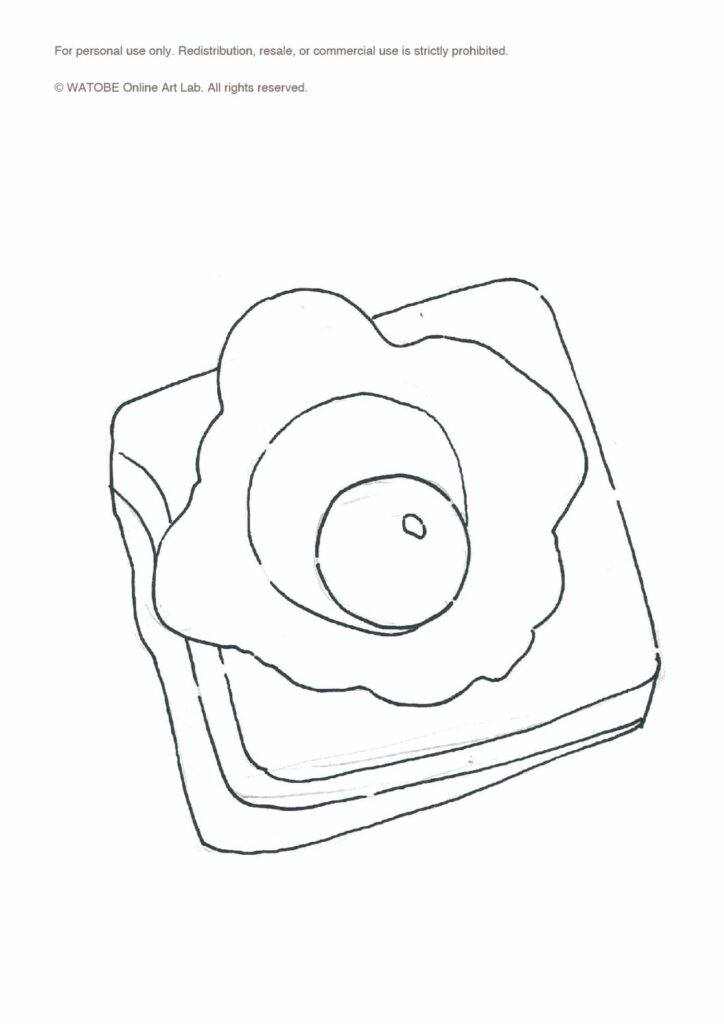
Beginner Step-by-Step Drawing is a structured pedagogical method that deconstructs complex visual subjects into basic geometric shapes and logical layers. At WATOBE Online art lab, this process typically follows a four-stage framework:
The Primitive Stage: Identifying circles, squares, and triangles within a subject.
The Construction Stage: Connecting primitives to create a “skeleton” of the drawing.
The Value Stage: Applying light and shadow based on the physics of light.
The Refinement Stage: Adding textures and fine details to achieve realism. This method reduces cognitive load and allows beginners to build technical “muscle memory” while producing professional-looking results from their very first lesson.
The Pedagogy of "The Step" – Why Sequential Learning Wins
2.1 Reducing Cognitive Overload
When a beginner looks at a finished oil painting, their brain is overwhelmed by thousands of choices in color, texture, and edge. By utilizing Beginner Step-by-Step Drawing, we isolate these choices. We tell the brain: “Don’t worry about the eyelashes yet; just find the circle of the eyeball.” This isolation is the key to preventing “Artistic Burnout.”
2.2 The WATOBE Laboratory Model
Unlike generic tutorial sites, WATOBE functions as an “Art Lab.” This means we emphasize experimentation. Our online sketching courses encourage students to draw the same “Step 1” twenty times to master the mechanical movement of the shoulder and elbow.
The Toolkit – Essential Art Supplies for Beginners
A master is only as good as their tools, but a beginner shouldn’t be overwhelmed by them. Here is our expert-curated list for 2026.
3.1 Graphite Pencils: The Core Medium
In Beginner Step-by-Step Drawing, we use the Graphite Scale.
$H$ (Hard) Pencils: Used for Step 1. These lines are light and easy to erase.
$B$ (Black/Soft) Pencils: Used for the Value and Refinement stages.
3.2 Paper Weight and Texture
We recommend paper with a minimum weight of 160g/m². Anything thinner will tear during the erasure process, which is a frequent part of the “Step-by-Step” learning curve.
3.3 Recommendation Table
| Supply | Purpose | Recommended For |
| Kneaded Eraser | Lifting highlights | High-precision realism |
| Blending Stump | Smoothing gradients | Skin and clouds |
| $2\text{B}$ Pencil | General sketching | Everyday practice |
| Fixed Drawing Board | Consistent perspective | Professional-grade study |
Technical Foundations – The Physics of Art
At WATOBE Online art lab, we believe understanding the science of sight makes you a better artist.
4.1 The Law of Light Intensity
When teaching shading in our online drawing classes, we refer to the Inverse Square Law. Understanding that light falls off predictably allows a student to place shadows with mathematical accuracy.
Where $E$ is illuminance, $I$ is the intensity of the light source, and $d$ is the distance.
4.2 One-Point Perspective
In Beginner Step-by-Step Drawing, we teach you to find the “Horizon Line” and “Vanishing Point.” This is the only way to draw a realistic room or street that doesn’t look “tilted.”
Specialized Tracks – Children's Art at WATOBE
5.1 Building Confidence Through “Easy Steps”
For our children’s art program, we gamify the step-by-step process. We use “Animal Construction” where a child learns that a lion is just a series of circles. This builds spatial reasoning skills that translate to success in STEM subjects.
5.2 Developmental Milestones
Drawing improves fine motor skills and hand-eye coordination. Our instructors are trained to encourage “Creative Play” within the structured steps, ensuring children don’t lose their unique imagination while learning technical skills.
Transitioning to Oil Painting Mastery
Once a student masters online sketching, the path to oil painting becomes clear.
6.1 The Grisaille Method
We teach beginners to start their oil paintings using only black and white. This is essentially a “painted drawing.” Because the student already understands the Beginner Step-by-Step Drawing value scale, they don’t have to worry about the complexity of color right away.
6.2 Understanding Mediums
Our art supplies experts guide students through the safe use of linseed oil, mineral spirits, and pigments, ensuring a professional and healthy studio environment at home.
The WATOBE Online Art Lab Advantage
7.1 Professional Feedback Loop
The “Step-by-Step” method is only effective if you know you’ve done Step 1 correctly. WATOBE provides:
Video Critiques: Our masters record themselves drawing over your work to show you exactly where to adjust.
Live Q&A: Real-time sessions to answer technical questions about art supplies or composition.
7.2 Lifetime Access & Community
Learning to draw is a marathon, not a sprint. Our platform fosters a global community where students can share their Step-by-Step progress, creating a sense of accountability and shared joy.
Daily Drawing Exercises for Beginners
To truly learn sketching, consistency is more important than duration. We recommend the “15-Minute Lab”:
Minute 1-5: Line quality exercises (Ghosting).
Minute 6-10: Primitive deconstruction (Drawing boxes and spheres).
Minute 11-15: One small “Step-by-Step” project (e.g., an apple or a simple eye).
Overcoming Common Beginner Mistakes
9.1 “Petting” the Line
Many beginners draw with short, hairy strokes. At WATOBE, we teach you to draw from the shoulder, creating long, confident, continuous lines.
9.2 Fear of Dark Shadows
Beginners often leave their drawings too light. We use “Value Matching” exercises to show students that deep blacks are what make a drawing look three-dimensional.
Your Future as an Artist
As we look toward the future of creative expression, the value of the “handmade” has never been higher. By committing to a Beginner Step-by-Step Drawing program, you are doing more than just learning to doodle; you are re-wiring your brain to see the beauty, logic, and structure of the world around you.
WATOBE Online art lab is more than just a school; it is a community dedicated to your growth. Whether your goal is to create a realistic portrait of a loved one, explore the vibrant textures of oil painting, or give your child the gift of children’s art education, we provide the ladder you need to reach your goals—one step at a time.
The world is composed of simple shapes waiting for you to find them. The “blank page” is not an obstacle; it is a destination.
Are you ready to take the first step? Visit WATOBE Online art lab today and experience the most effective Beginner Step-by-Step Drawing curriculum in the digital world. Your masterpiece starts here.